How Local Music Scenes Turn Into National Movements

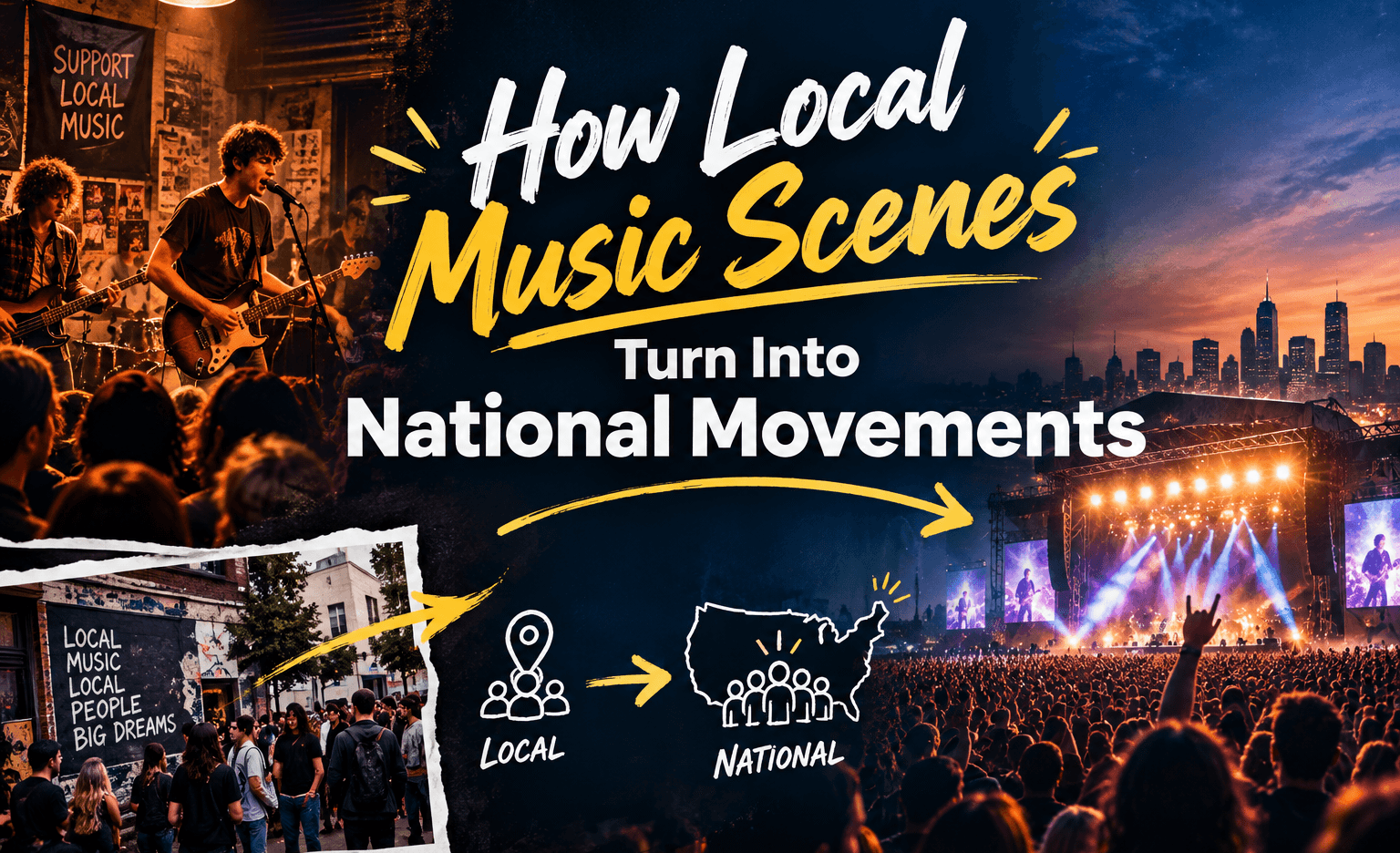
Every so often, a specific city’s local scene starts producing artists at a rate that’s hard to ignore. What usually begins as a handful of small venue shows can, within a couple of years, grow into a genuine hub — with several artists from the same scene suddenly getting national attention around the same time.
Part of what drives that kind of growth is a shared willingness among local artists to blend genres that don’t typically overlap, a pattern that tends to emerge organically when artists share bills and collaborate regularly rather than staying in separate lanes. The result is often a local sound that’s hard to categorize from the outside but easy to recognize once you’ve heard a few of its artists back to back.
Local venues play a bigger role in this growth than they’re usually credited for, with venues that actively champion emerging acts through regular showcase nights doing more for a scene’s development than any single artist’s success on their own. That kind of infrastructure compounds over time — more shows lead to more opportunities to build an audience, which gives artists more reason to stay rooted in a scene rather than relocating early.
Scenes that produce lasting movements, rather than a single one-off breakout artist, are almost always the ones where this kind of local infrastructure exists before any individual artist becomes well known.