A Battery That Could Last 20 Years? Dr. Ko-Cheng Fang Teases a New Nuclear Energy Innovation

For decades, the battery industry has been defined by a familiar limitation: no matter how advanced a device becomes, its power source eventually needs to be recharged or replaced. Smartphones need daily charging, electric vehicles require regular access to charging infrastructure, and countless electronic systems depend on batteries that gradually lose their ability to hold energy.
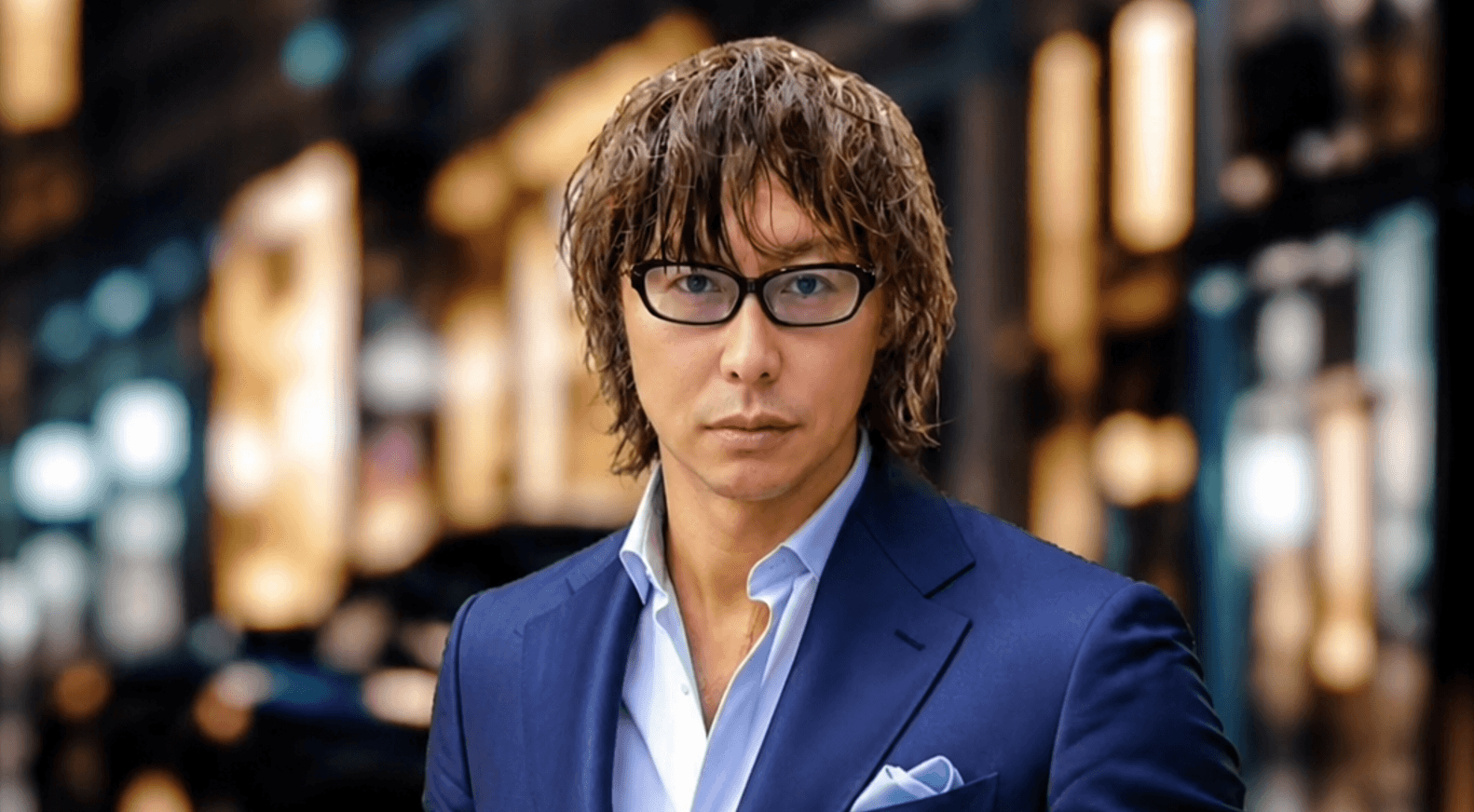
Now, Dr. Ko-Cheng Fang, founder and chairman of LongServing Technology, is preparing to introduce a very different vision for portable power — one centered on a compact nuclear-energy concept that, according to the technology’s proposed specifications, could operate for as long as 20 years without conventional recharging.
The proposed technology is part of a broader body of future-oriented research associated with Dr. Fang and LongServing Technology. The company says it has been working on advanced technologies spanning semiconductors, photonic computing, AI, energy systems and next-generation propulsion. Its latest research announcements have also referenced floating and anti-gravity-related technologies, reflecting an unusually broad approach to future engineering.
But Dr. Fang’s vision extends well beyond simply creating a longer-lasting battery. In his own account of the research, the nuclear battery is one part of a much more ambitious technological program involving new materials, alternative approaches to nuclear energy and even a proposed floating propulsion system.
The upcoming battery announcement could therefore represent another significant step in Dr. Fang’s continuing effort to rethink technologies that have traditionally been constrained by existing engineering architectures.
Reimagining What a Battery Can Be
The basic concept behind the upcoming announcement is simple but ambitious: create a compact energy source capable of producing useful power over an extremely long period without requiring the frequent charging associated with conventional batteries.
According to the concept being promoted by Dr. Fang, the proposed nuclear battery could be designed in a size small enough for applications ranging from vehicles to electronic devices. Rather than depending on regular charging from an external electrical source, the system would utilize nuclear energy as its underlying power-generation mechanism.
That immediately raises an important question: what would happen if a device did not need to be plugged in every night, every few days, or even every few months?
Such a development could fundamentally change how engineers think about portable power.
Today’s electronics are increasingly capable, but their usefulness remains tied to energy availability. A smartphone can contain powerful processors, advanced cameras, artificial intelligence capabilities and high-speed connectivity, yet all of those functions ultimately depend on a battery that must be repeatedly recharged.
A long-duration nuclear battery would approach the problem from the opposite direction.
Instead of continually finding ways to recharge a battery faster, the goal would be to dramatically extend the period between energy replacement or maintenance.
Dr. Fang places this idea within a larger debate about the future of battery technology. Solid-state batteries, lithium iron phosphate batteries and ternary lithium batteries — including nickel-cobalt-manganese chemistries — are among the technologies being pursued across the automotive and energy industries. Yet, from his perspective, conventional lithium-based systems continue to face challenges involving energy density, driving range and safety.
His argument is not that existing battery technologies have stopped advancing, but that the next major breakthrough may require a fundamentally different approach to energy generation rather than another incremental improvement in rechargeable chemistry.
From Smartphones to Cars
One of the most intriguing aspects of the proposed technology is its potential range of applications.
A compact, long-life energy source could theoretically have relevance across multiple industries. Consumer electronics would be one obvious area. Smartphones, sensors, remote communication equipment and other low-power devices could benefit from an energy source designed to operate for extremely long periods.
The implications could be even greater in environments where conventional battery replacement or charging is difficult.
Remote monitoring systems, industrial sensors, scientific equipment and specialized electronic systems often operate in locations where frequent human intervention is inconvenient or expensive. A long-duration power source could reduce the need for regular maintenance and battery replacement.
The automotive sector represents another potentially important application.
If the technology can ultimately be engineered to provide the required power output, durability and safety characteristics for transportation, the concept could open an entirely different discussion about how vehicles are powered. Rather than depending exclusively on conventional rechargeable battery systems, future vehicles could potentially incorporate radically different energy architectures.
For Dr. Fang, however, the automotive application is connected to an even more ambitious objective: freedom of movement through the air.
He describes the ability to migrate and soar through the sky like a bird as an enduring human dream. He says that, since childhood, he has repeatedly dreamed of floating above the ground and flying through the air, including vivid dreams of overtaking vehicles while traveling above highways.
According to his own account, these experiences eventually became connected to his meditation practice and led him to what he describes as an unusual insight: the possibility of a floating board powered by a compact nuclear system and controlled through brain signals.
This proposed technology, which Dr. Fang refers to in terms of floating metal and thought-controlled flight, is presented by him as the next stage of the same research program.
The exact applications, energy output, physical dimensions, safety characteristics and commercial readiness of Dr. Fang’s proposed nuclear battery will need to be established through the company’s forthcoming technical disclosures and independent validation. The same applies even more strongly to the proposed floating propulsion technology.
Why Nuclear Energy?
Nuclear energy has long attracted attention because of its extraordinary energy density.
Unlike conventional chemical batteries, nuclear systems can derive energy from nuclear processes rather than relying exclusively on chemical reactions. This is one reason nuclear power has been explored for applications requiring long operating periods and high energy density.
The challenge has always been making nuclear technology practical, compact, safe and suitable for specific applications.
Dr. Fang’s upcoming announcement appears to focus on precisely this intersection between nuclear energy and compact technology.
The vision is not simply about producing energy. It is about potentially creating an energy source small enough to become part of everyday technological infrastructure.
That distinction is important.
A large nuclear power plant and a compact nuclear battery are obviously very different technologies. The attraction of a battery-scale nuclear system is its potential ability to provide long-duration power without the infrastructure normally associated with large-scale nuclear generation.
Dr. Fang argues that the future of nuclear energy may also depend on looking beyond the nuclear materials and processes most familiar to modern industry. In his view, conventional nuclear technologies demonstrate the enormous power available from nuclear reactions, but radioactive contamination and the hazards associated with nuclear materials remain fundamental challenges.
He suggests that there may be other ways of controlling nuclear reactions and other materials capable of producing useful nuclear energy that have not yet been developed into practical technologies.
These ideas form part of his stated research direction, although their scientific validity and practical feasibility remain matters for technical demonstration and independent verification.
A Different Approach to the Charging Problem
The modern technology industry has spent enormous resources improving rechargeable batteries.
Battery chemistry has evolved significantly, charging systems have become faster, energy density has improved, and manufacturers continue to explore new materials.
Yet the fundamental user experience remains familiar: charge, use, recharge and eventually replace.
Dr. Fang’s proposed technology attempts to challenge that cycle.
If a compact nuclear battery could genuinely deliver useful energy over decades, the relationship between consumers and their devices could change considerably.
Imagine electronic equipment that is designed around a power source intended to last for years rather than hours or days.
Imagine industrial sensors that can operate for extended periods without technicians replacing batteries.
Imagine remote equipment that can remain operational without being connected to conventional charging infrastructure.
These are the types of possibilities that make long-duration energy technologies so interesting.
But Dr. Fang’s proposed solution goes beyond simply extending battery life. His stated goal is to rethink the underlying assumptions about what constitutes an energy source.
He describes his research into what he calls a “small solid-state nuclear battery” as an attempt to discover a form of nuclear energy that could operate without the destructive effects normally associated with nuclear technology.
The idea, as he presents it, is to control nuclear reactions in a way that produces useful energy while avoiding the conventional problems associated with radioactive contamination. Whether such a system can be realized as described will ultimately depend on detailed engineering evidence, repeatable testing and independent scientific evaluation.
The Floating Metal Vision
The nuclear battery is only half of the more extraordinary technology Dr. Fang says he has been developing.
According to his account, a flying or floating board would require two fundamental components: a compact nuclear power source and a material capable of producing what he describes as an anti-gravity or floating effect.
He calls this proposed material “floating metal.”
Dr. Fang describes the concept through an analogy involving opposing forces. In the familiar physical world, gravity determines the movement of objects toward massive bodies such as Earth. He proposes that there could also be a form of matter with an opposing effect, which he describes as anti-gravity matter.
According to his account, such a material does not naturally exist on Earth in a usable form and therefore would need to be synthesized.
This is one of the most unconventional aspects of his research program.
Dr. Fang connects the concept to a broader philosophical idea of opposing forces, comparing it to the traditional Chinese concept of Taiji, in which Yin and Yang represent complementary opposites.
The proposed floating technology would combine this material with the compact nuclear power system and, ultimately, a control mechanism based on thought or brain signals.
At present, however, these claims remain proposals attributed to Dr. Fang rather than independently established scientific technologies. Demonstrating a repeatable anti-gravity effect and a practical brain-controlled propulsion system would require extensive experimental evidence.
From Dreams to the Laboratory
Dr. Fang says his interest in the floating technology did not begin with conventional engineering research.
Instead, he describes it as something he encountered repeatedly in dreams.
For years, he says, he dreamed of flying above highways and watching vehicles pass beneath him. After beginning meditation, he interpreted these experiences differently, eventually connecting them with the idea of a floating aircraft controlled by thought.
That interpretation prompted him to investigate whether anything resembling the technology existed in historical records or scientific literature.
He says he searched ancient texts, research literature and archival material but found no documentation that described the technology in the form he had envisioned.
Rather than abandoning the idea, he began attempting to reconstruct it himself.
This became the basis for laboratory experimentation involving chemical materials and metal-processing techniques. According to Dr. Fang, the objective was to identify or manufacture the materials necessary to produce both the floating effect and the compact energy source.
His approach reflects a philosophy that has characterized much of his broader technology work: when an idea does not fit comfortably within existing engineering assumptions, he believes it should still be investigated experimentally rather than rejected outright.
A Self-Taught Approach to Technology
Dr. Fang says that he has deliberately pursued technology research largely through self-directed experimentation rather than relying exclusively on established academic pathways.
In his view, existing theories can sometimes become limitations when researchers refuse to investigate possibilities outside accepted frameworks.
He gives the example of his earlier work involving a material capable, according to his claims, of producing a two-nanometer wavelength for photonic applications. He argues that a researcher working strictly within conventional academic or engineering structures might face immediate skepticism when proposing something that challenges prevailing assumptions.
The same philosophy, he says, has guided his work on the proposed nuclear battery and floating metal.
“Without challenges,” he argues, there is little opportunity to experience the satisfaction of overcoming them.
He compares his technological research to his approach to artistic creation: both require experimentation, persistence and a willingness to work against resistance.
For Dr. Fang, this mentality has also meant accepting criticism.
He acknowledges that people have called some of his inventions impossible, or even regarded him as a liar or a person pursuing unrealistic ideas. He points to projects such as his work involving Imperial Green jade, a combination lock and his photonic research as examples of technologies over which he says he faced years of skepticism.
LongServing Technology has also published material relating to photonic computing and optical technologies, including demonstrations that the company says show a photonic light path turning through 90 degrees while maintaining a stable wavelength on an oscilloscope.
Whether the company’s most ambitious claims ultimately achieve broad scientific acceptance will depend on the evidence produced and independently reproduced.
Beyond the Battery: Dr. Fang’s Broader Technology Vision
The nuclear battery concept is not appearing in isolation.
LongServing Technology describes Dr. Ko-Cheng Fang as an inventor working across multiple technology fields. The company’s website highlights his involvement in semiconductor manufacturing technologies, photonic computing, cybersecurity, AI robotics and other areas.
His work on photonic computing is particularly notable within the company’s technology portfolio. LongServing says Dr. Fang developed a multi-bit optical computing approach intended to move computing beyond conventional binary architectures. The company has also published information about photonic memory and related optical computing structures.
LongServing has additionally announced research into future energy and propulsion systems, including floating and wearable flight-related concepts.
Taken together, these projects illustrate a consistent theme: an attempt to explore technologies that could operate differently from established engineering models.
The proposed nuclear battery fits naturally within that broader philosophy.
What Does “20 Years” Mean?
The most attention-grabbing element of the upcoming announcement is undoubtedly the potential 20-year operating lifespan.
That figure deserves careful consideration.
A battery’s lifespan can mean different things depending on how the technology is defined. It could refer to the period during which the energy source remains capable of producing power, the expected operating life of the device, or another technical measurement.
For that reason, the 20-year figure should be understood as a proposed performance target or claim associated with the upcoming technology until detailed specifications, testing data and independent technical verification are available.
Questions such as energy output, power density, operating temperature, radiation management, shielding requirements, degradation rate, manufacturing cost, safety mechanisms and regulatory compliance will ultimately determine how practical the technology could become.
Those details will be crucial for evaluating its potential.
The Environmental Question
Another major part of the discussion surrounding the proposed technology is its potential environmental profile.
The concept has been promoted as a form of nuclear energy designed to operate without the conventional emissions associated with fossil-fuel-based power generation.
That could make long-duration nuclear energy particularly interesting in a world increasingly focused on reducing carbon emissions and developing alternative energy systems.
At the same time, nuclear technology cannot simply be described as “pollution-free” without qualification. Nuclear systems can avoid operational carbon emissions in certain contexts, but radioactive materials, manufacturing, safety, containment and end-of-life management all require careful consideration.
Dr. Fang’s own argument is that the challenge is not simply extracting energy from nuclear reactions, but finding a way to control those reactions so that they can become practical for compact applications.
Any commercially viable nuclear battery would therefore need to meet stringent technical and regulatory requirements before widespread consumer or automotive deployment.
Those considerations do not diminish the potential importance of the research. Instead, they highlight why the upcoming technical announcement could be significant.
Twenty Years of Research
Dr. Fang says the research behind these technologies has not been a short-term project.
According to his account, he has spent approximately two decades pursuing research and development while maintaining the ability to purchase the equipment and materials he needed.
He emphasizes that he did not need to borrow money to conduct the research and says that, throughout the development process, he was able to acquire the laboratory equipment and chemical materials required for his experiments.
He also points to long-standing relationships with suppliers as part of that history.
As an example, he describes a chemical raw-materials store owner in Taipei whom he has known since they were young and who has remained familiar with his work through the years.
For Dr. Fang, this history is part of the explanation for why the floating-metal and nuclear-battery projects have reached their current stage.
It also helps explain the confidence behind his latest announcement: he believes the technology is now approaching a point where it can move from private research into public demonstration.
Could This Change Everyday Technology?
It is too early to say whether the proposed technology will become a mainstream replacement for conventional rechargeable batteries.
But that is precisely what makes the announcement interesting.
Technological progress often begins by challenging an assumption that has become so familiar that people stop questioning it.
For modern electronics, that assumption is that batteries must regularly be recharged.
Dr. Ko-Cheng Fang’s proposed nuclear battery concept asks a different question:
What if the energy source could remain operational for decades?
If the technology can demonstrate the claimed characteristics in practical testing, it could create opportunities across consumer electronics, transportation, industrial systems, remote infrastructure and other sectors.
The road from a technological concept to mass-market commercialization is, however, substantial. Engineering validation, safety testing, regulatory approval, manufacturing scalability and economic feasibility would all need to be addressed.
The same standard will apply to the proposed floating-metal technology. Extraordinary claims require extraordinary levels of evidence, particularly when they involve nuclear energy, anti-gravity effects and thought-controlled flight.
A Personal Philosophy Behind the Research
Despite the skepticism surrounding his most ambitious projects, Dr. Fang says he does not expect everyone to believe him immediately.
His attitude toward skepticism is philosophical as much as technological.
He argues that people naturally understand the world through the boundaries of what they already know. In his view, genuinely new technologies can therefore appear impossible before they are demonstrated.
He compares the process to looking at the sky.
“When you look up at the sky,” he says in describing his philosophy, “the sky is also looking at you.”
For him, the willingness to think differently is inseparable from invention.
He describes this as the temperament of a “natural artist” — someone willing to work outside conventional expectations, accept criticism and continue experimenting even when others consider the objective unrealistic.
Whether that philosophy will produce a commercially viable nuclear battery or floating propulsion system remains to be seen. But it clearly explains the ambition behind the research.
A New Chapter in Long-Duration Energy
Dr. Ko-Cheng Fang’s upcoming announcement is therefore worth watching not simply because of the headline-grabbing possibility of a 20-year battery, but because it represents a broader attempt to rethink the way energy could be generated and delivered.
LongServing Technology has already positioned itself around technologies that it says could influence the future of computing, semiconductors, AI and advanced engineering. Its portfolio includes patented work in cybersecurity and computer data protection, as well as photonic and semiconductor technologies.
The proposed nuclear battery adds another dimension to that vision.
A compact energy source capable of operating for years without conventional recharging would represent a fundamentally different approach to portable power. Whether the technology ultimately achieves the ambitious specifications being discussed remains to be demonstrated, but the concept itself raises important questions about what the next generation of batteries could look like.
And the battery may ultimately be only the beginning.
If Dr. Fang’s account is accurate, the broader research program is aimed at combining long-duration nuclear energy with a new class of materials and propulsion technologies — potentially leading toward the floating, thought-controlled transportation system he has envisioned for years.
As the world becomes increasingly dependent on connected devices, electric transportation, autonomous systems and intelligent machines, energy will remain one of the defining challenges of technological development.
Dr. Ko-Cheng Fang’s next announcement aims directly at that challenge.
And if the promised technology can move successfully from research and development into independently validated, safe and commercially practical applications, the idea of a battery that lasts not days or months, but potentially decades, could become one of the more intriguing developments in the future of portable energy.
For those following the work of Dr. Ko-Cheng Fang and LongServing Technology, the forthcoming announcement may offer an important glimpse into how energy technology could evolve beyond today’s rechargeable battery model.
However, the ultimate test will be the evidence produced when the technology is publicly demonstrated and independently evaluated.
Website: https://longserving.com.tw/
Instagram: @ko_cheng_fang